Showing posts with label randomsharing. Show all posts
Showing posts with label randomsharing. Show all posts

If you’re a diet-conscious health buff, you should read this. If you’re not, then you should read this all the same. :) By learning to interpret and understand food labels, you will be able to make better and more informed choices about the food you eat.
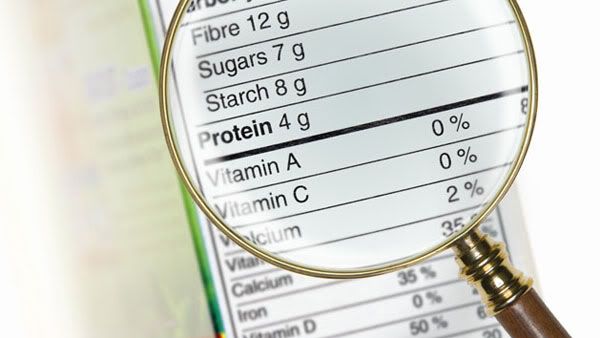
It is mandatory for food manufacturers to list ingredients and nutritional information on food labels. Nutrition labeling is required for most prepared foods (such as breads, cereals, frozen and canned foods, snacks, desserts and drinks), whereas labeling for raw produce (fruits and vegetables), fish, poultry and meat is voluntary.
1. On a food label, you should find the Nutrition Facts table, which contains the suggested serving size, number of servings per container, number of calories and calories from fat. The nutritional analysis of the food is provided: nutrients that are required on all food labels include total fat, saturated fat, cholesterol, sodium, total carbohydrate, dietary fiber, sugar, protein, vitamin A, vitamin C, calcium and iron. The food label will also list the ingredients used to prepare the product, as well as any potential allergens. Each of these will be discussed in turn.
2. Start off by looking at the serving size at the top of the Nutrition Facts table as all the nutritional information on the label relates to the serving size. The nutrient amounts listed in the Nutrition Facts table are stated in grams (g) or milligrams (mg), and as a percentage (%) of the Daily Value (DV). The DV is based on a 2,000 calorie diet. So assuming you consume 2,000 calories a day and you ate one serving of this particular food, you would have consumed:
* 200 calories (of which 15 calories come from fat);
* 1.5 g total fat (2% of the daily value);
* No cholesterol or sodium (0 mg);
* 41 g total carbohydrate (14% of the daily value);
* 6 g dietary fiber (24% of the daily value);
* 2 g sugar and 7 g of protein (sugar and protein do not have a
* percent daily value);
* 8% of the daily iron requirement, 15% of the daily phosphorus, and
* 15% of the daily magnesium, but no significant amounts of Vitamin A or C, or calcium. One serving of this food contains at least 28 g of whole grain.
So we know the nutritional information is based on the serving size, i.e. 2 oz (56 g) in this example. Say you eat double the serving size, i.e. 4 oz (112 g); then you need to multiply all the amounts listed on the Nutrition Facts label by 2, so you'll consume 400 calories, 3 g total fat, 82 g total carbohydrate, 12 g dietary fiber, etc. If you are watching your weight, pay special attention to the serving size, especially for calorie-dense and high-fat foods.
3. You'll usually find a statement which reads, "Percent daily values are based on a 2,000 calorie diet. Your daily values may be higher or lower depending on your calorie needs." at the bottom of the Nutrition Facts table. Underneath that you'll find the daily values for total fat, saturated fat, cholesterol, sodium, total carbohydrate and dietary fiber based on 2,000 or 2,500 calories. If you consume 2,000 calories per day (look at the 2,000 calories column), then you should eat less than 65 g total fat per day, less than 20 g saturated fat, less than 300 mg cholesterol, less than 2,400 mg sodium, and aim to eat 300 g total carbohydrate, and 25 g of dietary fiber per day. Now look at the daily values listed under the 2,500 calorie column. All of them are higher except for cholesterol and sodium; the daily recommended amounts for cholesterol and sodium are always the same, regardless of the number of calories consumed per day.
4. Interpret the list of ingredients. Ingredients in a food product are listed in descending order of weight (from most to least) according to the amount contained in the recipe. So the ingredient listed first occurs in the largest amount, followed by the next ingredient, and then the ingredient after that, and so on, until the last ingredient in the list, which is present in the smallest amount. In this particular example, the main ingredient in this food is whole durum wheat flour; the ingredient used in the smallest quantity is oat fiber (last ingredient on the list).
5. Know about allergens. An allergen is a substance that can cause an allergy. Examples include nuts, wheat, soy, milk and eggs. If you or anyone in your family has a food allergy, be sure to check the list of potential allergens or other warnings on the label which may alert you to other foods prepared on the same equipment. This food product contains wheat ingredients and is made on equipment that processes products that contain eggs.
Read the labels on your favorite food stuffs in your grocery cupboard, and you might be surprised at what you find! Now that you know how to interpret and understand food labels, you can use this information to compare similar products to choose those foods which best suit your needs.
Also, you might want to check out: The How's of Eating.
Buon appetito,

In the same vein, how many eggs should we eat every day?
With more than 98% utilization and high nutritional value, eggs are a vital part of our diet. The amino acids in eggs are very suitable for human physiological needs and are easily absorbed by the body.
One egg weighs about 50 grams, 7 grams of protein, 6 grams fat, 82 kcal of heat generated.

It contains calcium, phosphorus, iron and high vitamin A and B content. It also contains many other kinds of human essential vitamins and trace elements for children, the elderly, mothers and people who have hepatitis, tuberculosis, and anemia, and surgery patients for it has a good recovery tonic.
Enough of the blab. We know that anything with too much consumption is not good. So now we ask, "Is eating eggs every day harmful?" and "How many eggs should be eaten every day?"
To dig deeper, we lay the facts:
First, the egg contains large amounts of cholesterol. Eating eggs too much will result in high blood cholesterol, causing atherosclerosis and cardiovascular and cerebrovascular diseases. To maternal, for example, an egg contains about 250 milligrams cholesterol, 10 milligrams cholesterol egg contains about 2500. This volume is a normal intake of nearly 10 times. In addition, eggs are rich in saturated fatty acids, so eating too much will definitely make sharp increase in serum cholesterol and can promote atherosclerosis and cardiovascular disease incidence.
Second, eating too much eggs can easily lead to excess nutrients leading to obesity. During the daily heat requirement, breastfeeding postpartum women need generally about 2800 to 3000 kcal of food intake, protein requirement of 90 grams. Eating 10 eggs a day is equivalent to the consumption of 70 grams of protein, 60 grams of fat, and about 820 thousand calories. Moreover, if nursing mothers eat a certain amount of staple food, like chicken, fish, meat, bean products, vegetables and fruits daily with the eggs, energy intake can reach 3500 to 3800 kcal, and protein and fat intake can 120 to 140 grams. This far exceeds the actual number of their nutritional needs, causing excess nutrients, thus excess fat will accumulate in the body to form fat.
Eating too much eggs also can cause nutrient imbalances in the body, which affects health. Our daily diet is composed of a variety of food, a reasonable and balanced diet that requires all nutrients the body needs an appropriate ratio.
At all times, regardless of the kind of food, despite the high nutritional value it can provide, long-term and over consumption of the food will lead to excess of certain nutrients and other nutrient deficiencies.
Eggs are no exception! The egg itself cannot supply all the nutrients needed by the body--for example, its own non-carbohydrate, vitamin C content is almost zero. Therefore, eating too many eggs, would inevitably reduce other food intake relative to intake of various nutrients imbalance. Over time, eating more eggs can likely cause nutrient deficiencies or other diseases caused by excessive eating.
In addition, eating too many eggs will increase the burden on our liver and kidneys. The human body needs eight essential amino acids. By eating only one to two eggs, we can meet this need. The nutrients in the excess number of eggs consumed will no longer be absorbed and used and therefore will be converted and accumulated into fat or will be wasted as heat.
So, to answer our starred questions, from the nutritional point of view, in order to ensure a balanced diet and to meet the body needs, for the elderly, eating one to two eggs a day is good. For the young and the middle-aged who are engaged in mental work or light work, eating two eggs a day is more appropriate. For those who are engaged in heavy manual labor, the daily consumption of eggs should be two to three. For the youth or the children who have faster metabolism, two to three also is recommended. For pregnant women, mothers, nursing mothers and those who are in recovery state after the implementation of major surgery patients, as needs to increase the quality protein every day, three to four eggs but not more is suggested.

Simple diet mistakes can derail your best efforts to get back into that favorite pair of jeans. If the scale seems stuck, or your weight drops off only to bounce back up, there’s a chance you could be making one of these 10 weight loss mistakes.

1. Relying on Crash Diets
Determined to lose 10 pounds fast, you turn to a crash diet. Perhaps your plan calls for nothing but grapefruit or cabbage soup each day. You slash your daily calories to fewer than 1,000 -- and sure enough, the pounds melt away. But when you eat so few calories, you train your metabolism to slow down. Once the diet is over, you have a body that burns calories more slowly -- and gains weight more quickly -- than ever before.
2. Skipping Breakfast
Skipping breakfast seems like a simple way to cut calories, but the result can be insatiable hunger the rest of the day. This may lead to unplanned snacking at the office and eating a super-size portion at lunch, making calorie counts soars. But breakfasts that are high in protein and fiber can reduce hunger throughout the day. In fact, studies show people who eat breakfast every morning are more likely to maintain a healthy weight.
3. Losing Track of Your Snacks
Maybe you count calories meticulously at every meal, but what about all those nibbles in between? There's the bag of pretzels at your desk, the little slice of cake at an office party, the taste of your son's ice cream cone. All of this mindless munching adds up and could sabotage an otherwise well-planned diet. If you're serious about counting calories, you may want to use a notebook to keep track of each bite.
4. Not Snacking at All
While mindless snacking can pad your waistline, thoughtful snacking may do just the opposite. People who eat several small meals and snacks a day are more likely to control hunger and lose weight. Snacking helps keep your metabolism in high gear, especially if the snacks are protein-rich. Nuts are a good, high-protein choice, and research suggests people who snack on nuts tend to be slimmer than those who don't.
5. Loading Up on Low-Fat
Low-fat products can play an important role in your diet. Just remember that low-fat isn't the same as low-calorie and it's not a license to take second and third helpings. If you pile your plate with low-fat cake, you may end up eating more calories than if you had a smaller slice of regular cake. The best way to know how much fat, sugar, and calories you're getting is to check the nutritional label.
6. Sipping Too Many Calories
When counting calories, many of us tend to overlook what's in our drinks. This is a big mistake when you consider that some fancy coffees and alcoholic beverages have more than 500 calories. Even the calories in fruit juice and soda can add up quickly. What's worse is that liquid calories don't curb hunger. You're not going to eat any less after a high-calorie drink.
7. Drinking Too Little Water
This is one of the simplest diet blunders to fix. Water is essential for burning calories. If you let yourself get dehydrated, your metabolism drags--and that means slower weight loss. Research suggests adults who drink eight or more glasses of water per day burn more calories than those who drink less. So try adding a glass of water to every meal and snack.
8. Ditching Dairy
Milk, cheese, and ice cream are taboo for many dieters, but ditching dairy foods may be counterproductive. Some research suggests the body burns more fat when it gets enough calcium and produces more fat when it's calcium-deprived. Calcium supplements do not appear to yield the same benefits, so dairy may have other compounds at work as well. Most dietitians recommend sticking to nonfat or low-fat milk, cheese, and yogurt.
9. Weighing Yourself Every Day
Weighing yourself daily is a recipe for frustration and doesn't yield useful information. It's more important to look for a long-term trend with weekly weigh-ins. If your goal is to lose 1 or 2 pounds a week, you'll be satisfied to see those full-pound drops when you step on the scale. The result is more motivating than the confusing swings that may accompany daily weigh-ins.
10. Setting Unrealistic Goals
Telling yourself you'll lose 20 pounds your first week is probably setting yourself up for failure. If you know you won't be able to do it, you may never start your diet in the first place. If you do diet and lose 5 pounds in a week, instead of celebrating, you may feel discouraged that you didn't reach your goal. A realistic goal is vital to successful dieting. If you're not sure what your goal should be, talk to a dietitian.



 Posts
Posts



